
KRALENDIJK – The Netherlands ranks among the countries with the greatest press freedom in the world. Yet journalist and presenter Natasja Gibbs believes there is cause for concern. Political pressure, commercial interests, social media and a lack of diversity can, in her view, erode journalism from within. For the Caribbean islands, she sees an additional problem: the Netherlands has structurally underinvested in regional journalism there.
At first glance, it almost sounds contradictory. This year, the Netherlands ranks second on the global press freedom index compiled by Reporters Without Borders, behind Norway — up from third place the previous year. By international standards, Dutch journalism is therefore among the strongest in the world.
And yet Gibbs has written a pamphlet with an ominous title: Why a Healthy Democracy Cannot Do Without Journalists. The book was published on 18 September by Meulenhoff, runs to 96 pages, and is structured around seven pillars through which Gibbs aims to make journalism more independent, more diverse and more resilient.
Her starting point is not that journalists are merely victims of external attacks. Journalism itself, she argues, must also look in the mirror.
People are increasingly saying they no longer read newspapers or trust the news, Gibbs notes. At the same time, sharp criticism of journalists is coming from the political arena. She believes this creates the risk that what journalism is actually for gets lost from view.
"And yet it truly is the backbone of our democracy," she says.
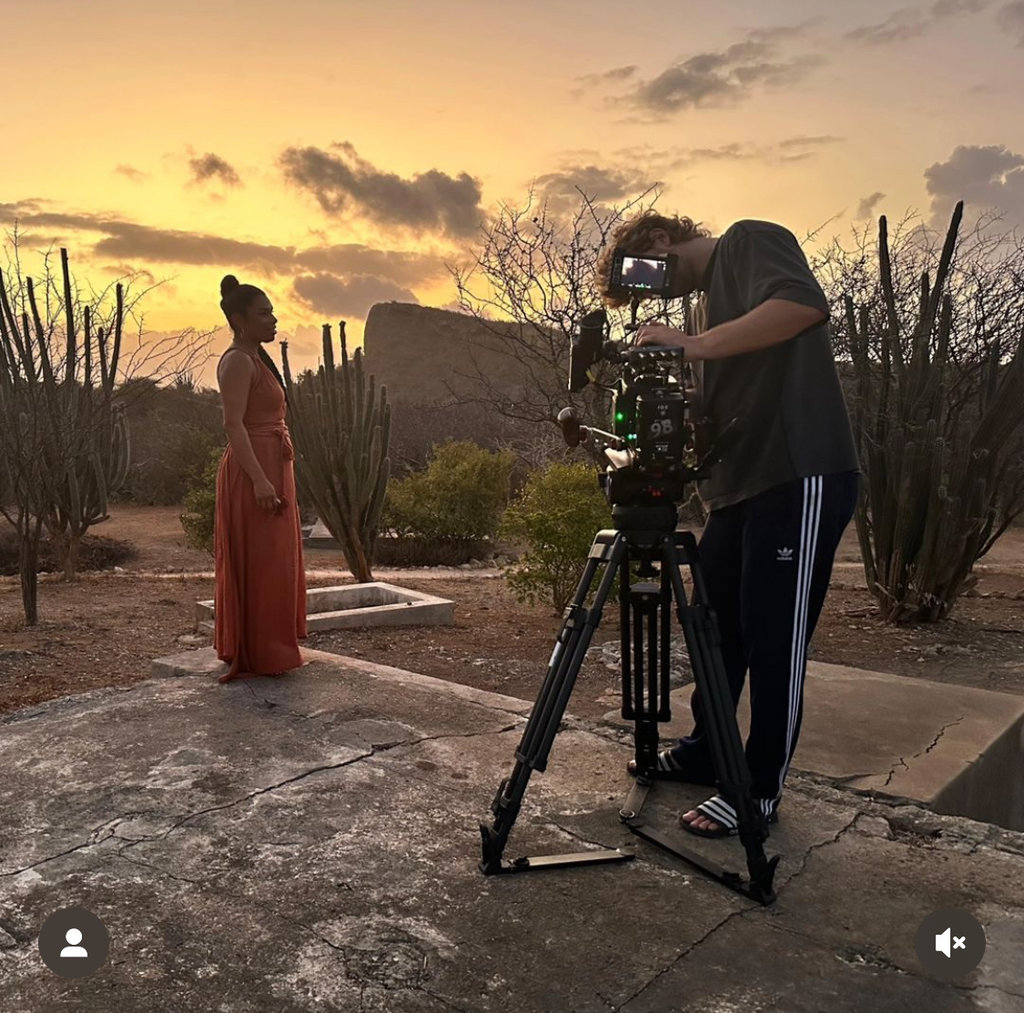
Video by Sam Jones
The islands fade from view
For Bonaire and Curaçao and the other Caribbean islands, her argument takes on an additional dimension.
Gibbs herself worked on Curaçao for many years and began her journalistic career there in 2011. She later worked for, among others, Caribbean Network, FunX, De Nieuws BV and various programmes on NPO Radio 1.
She draws on that experience to support one of her central arguments: regional journalism is not a luxury, she says, but a national necessity.
"The islands, the six islands within the Kingdom, are being ignored. Forgotten, even, when it comes to regional journalism and investment in it," says Gibbs.
She believes this has direct consequences for holding power to account.
"If you don’t scrutinise those in power at the regional level, you naturally can’t ask those questions in The Hague either."
This is particularly true for Bonaire, Saba and Sint Eustatius, she argues, because decisions that affect their residents are largely made within Dutch political and administrative structures. Without journalists on the islands themselves to observe what is happening, Gibbs says the information needed to hold national media and politicians accountable is simply absent.
She cites poverty on Bonaire as an example. Problems can only make it onto the political agenda in The Hague, she argues, when journalists identify and bring them to light at the local level.
The issue is not just about the volume of coverage, but also about who produces the news.
Gibbs argues that journalists from the Caribbean part of the Kingdom are still too often used by Dutch media outlets as support staff or local sources, while correspondents from the Netherlands take the lead. She notes that local journalists are sometimes assumed to be less capable of operating impartially because of their ties to the community. Gibbs rejects that reasoning.
This connects to one of the seven pillars in her pamphlet: complete neutrality, she argues, is an illusion. That does not mean, in her view, that journalists should take sides. Her argument is that every editorial team constantly makes choices, which story gets investigated, who gets a voice, and which story never gets told.
Not just politicians
It would be easy to place the blame for threats to journalism squarely on politicians. Gibbs deliberately does not do this.
She does point to politicians who publicly attack journalists or question the necessity of public media. But she considers the pressure within media companies themselves to be at least equally important: viewing figures, budget cuts, layers of management and the question of which topics attract a sufficiently large audience.
Technology companies also feature in her analysis. Increasingly, news reaches the public through algorithms on platforms over which editorial teams have little control. Journalists have, moreover, given away power themselves by relying ever more heavily on social media as a primary news source.
Why would a politician bother giving an interview when a newsroom will simply quote their social media posts anyway? That, in essence, is her argument.
Investigative journalism is particularly vulnerable in this regard, she says. Research takes money, manpower and, above all, time. Yet it is precisely this kind of journalism that is needed to hold power to account — while being the first to suffer when financial pressures mount.
The seven principles in her book therefore range from greater diversity in newsrooms to placing less emphasis on what performs well and more on what is socially relevant. Gibbs also argues that journalism must serve the public rather than the media system, and that it must not allow itself to be censored by political or commercial interests.
Threats
For Gibbs, this debate is far from theoretical.
She recounts receiving threats after raising critical questions in her journalistic work about Israel’s treatment of Palestinians. Her reporting and public appearances on the Dutch history of slavery also prompted racist responses.
After speaking on a talk show about the way the Dutch Golden Age is perceived, she says she received reactions along the lines of: "Send her back on that boat."
These experiences, for her, are part of a broader trend in which journalists increasingly become the personal subject of debate the moment their questions or topics meet with resistance.
Gibbs does not, however, conclude from this that journalism should simply defend itself. On the contrary. Part of the public’s distrust, she argues, has been brought about by the industry itself — in part through years of failing to represent certain groups, or representing them one-sidedly.
This applies to the Caribbean islands as well, she says. When Dutch media outlets tend to show up only when there is a political conflict, a corruption case or a natural disaster — but invest little in a sustained presence — no lasting relationship with the audience can develop.
"If you ignore certain communities for years on end, you shouldn’t be surprised when they tune out," she says in an interview with OneWorld.
‘Urgent’
Former correspondent Kees Broere recognises the warning. He spent around forty years working primarily in international journalism and describes Gibbs’ pamphlet as "urgent."
Broere says he experienced a journalistic world in which he felt free and respected, and in which it was clearer to the public that a correspondent was doing their work independently. That climate, he says, has changed rapidly.
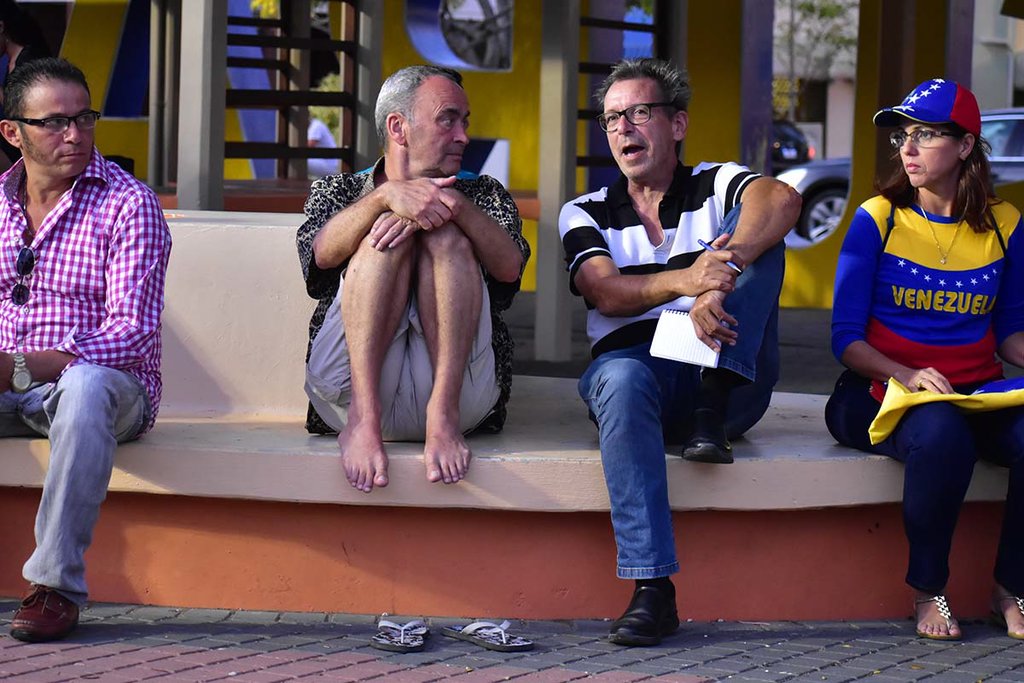
He therefore sees Gibbs’ book above all as a warning not to wait until independent journalism is genuinely lost.
"It’s not just journalism we’re losing," says Broere. The loss of independent journalism, he argues, will ultimately put the democratic rule of law and public accountability under pressure as well.
Meanwhile, the Netherlands continues to rank very highly on international press freedom indices. On the RSF index, the country even climbed from third to second place this year. At the same time, RSF is recording a global deterioration: the organisation reports that the average press freedom score worldwide has not been this low in 25 years.
It is precisely in that gap that the essence of Gibbs’ warning lies. Press freedom is not lost only when a government shuts down newspapers or arrests journalists. According to her, erosion begins earlier: when newsrooms no longer reach certain parts of society, when investigative journalism is considered too expensive, when algorithms determine which news is seen, or when journalists temper their questions out of fear of losing access to those in power.
For the Caribbean islands, Gibbs believes the solution therefore starts with something very concrete: ensure there are journalists who work there permanently, who know the community, and who have sufficient resources to hold power to account.
Because without information from Willemstad, Kralendijk or Oranjestad, there is ultimately very little that can be held to account in The Hague either.


