Bonaire nearly doubles according to CBS figures: from 15,000 to 27,000 residents in 15 years

KRALENDIJK - The Caribbean part of the Kingdom of the Netherlands now has 340 thousand inhabitants. That’s almost 10 percent more than fifteen years ago, when the constitutional reform took place. Statistics Netherlands (CBS) published comprehensive figures on October 10th about developments on the six islands since October 10, 2010.
On that date, the country of the Netherlands Antilles was dissolved. Curaçao, Aruba, and Sint Maarten became autonomous countries within the Kingdom. Bonaire, Sint Eustatius, and Saba became special municipalities of the Netherlands, collectively called Caribbean Netherlands.
Bonaire grows fastest
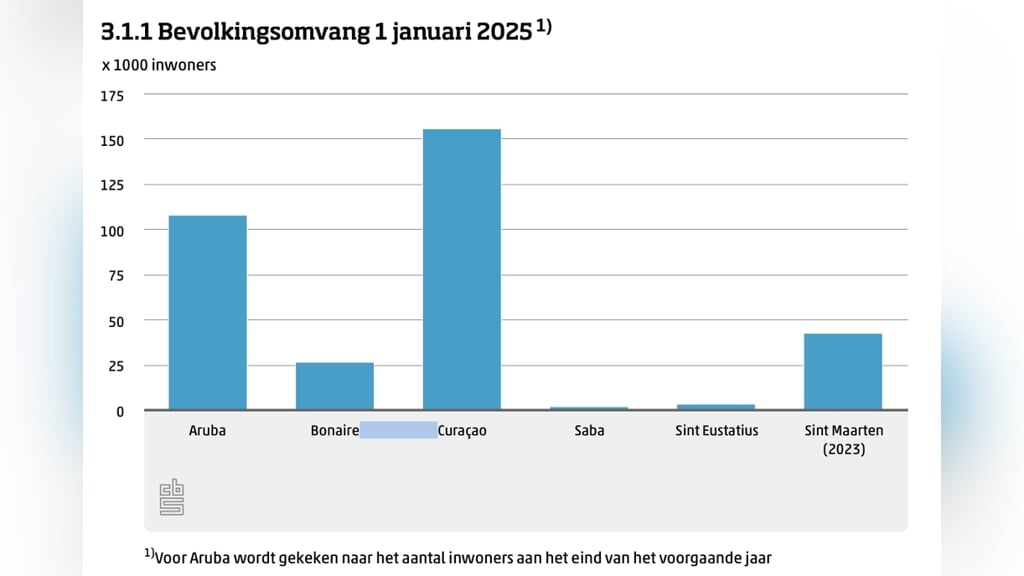
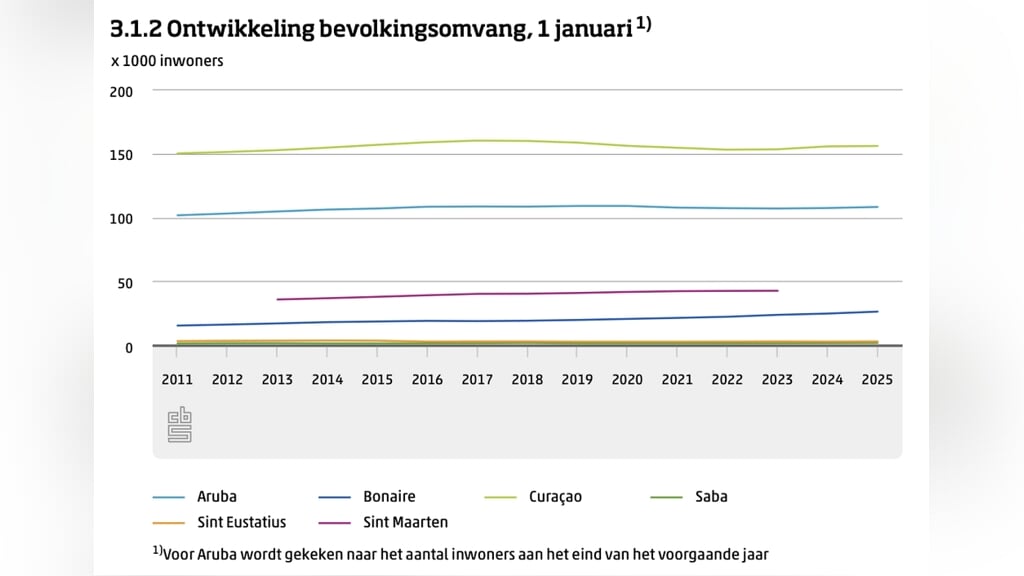
Of all islands, Bonaire grew the fastest. The population increased from just over 15 thousand in 2011 to nearly 27 thousand in 2025. That’s an increase of almost 70 percent. The growth mainly comes from more people moving to the island than leaving it.
Curaçao remains the largest island with just over 156 thousand inhabitants. Aruba has slightly more than 108 thousand residents. Sint Maarten had nearly 43 thousand inhabitants in 2023, the most recent year with available data.
Of the BES islands, Sint Eustatius is the smallest with just over three thousand inhabitants. Saba has slightly more than two thousand residents.
Population aging
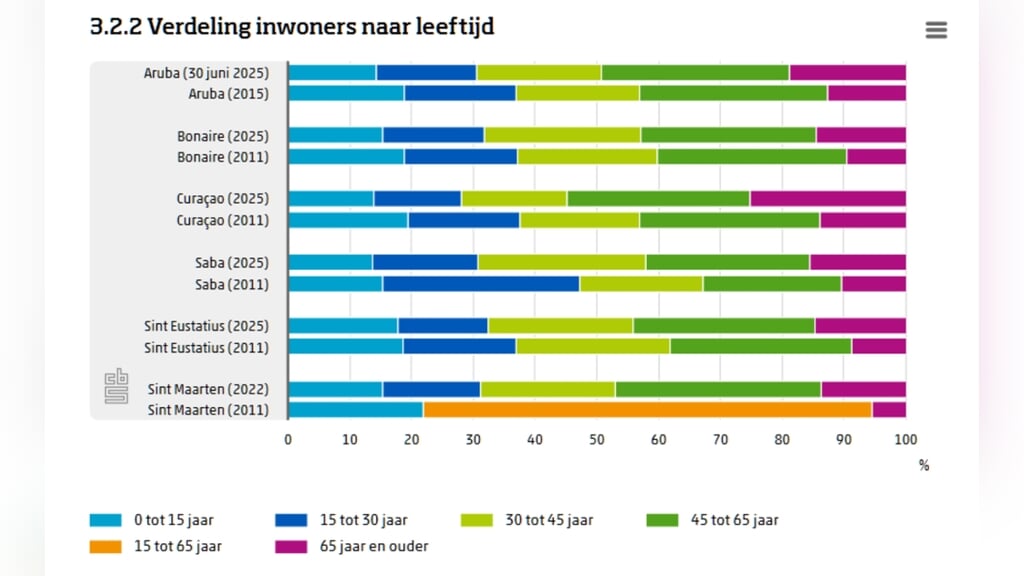
All islands have aged over the past fifteen years. This process happened fastest on Curaçao. In 2011, 13.8 percent of the population was older than sixty-five years. In 2025, that’s a quarter of all inhabitants.
The share of seniors also increased on the BES islands, from about 10 percent in 2011 to around fifteen percent in 2025. The increase is visible across all age categories, but especially the group of sixty years and older has grown significantly.
Diverse origins
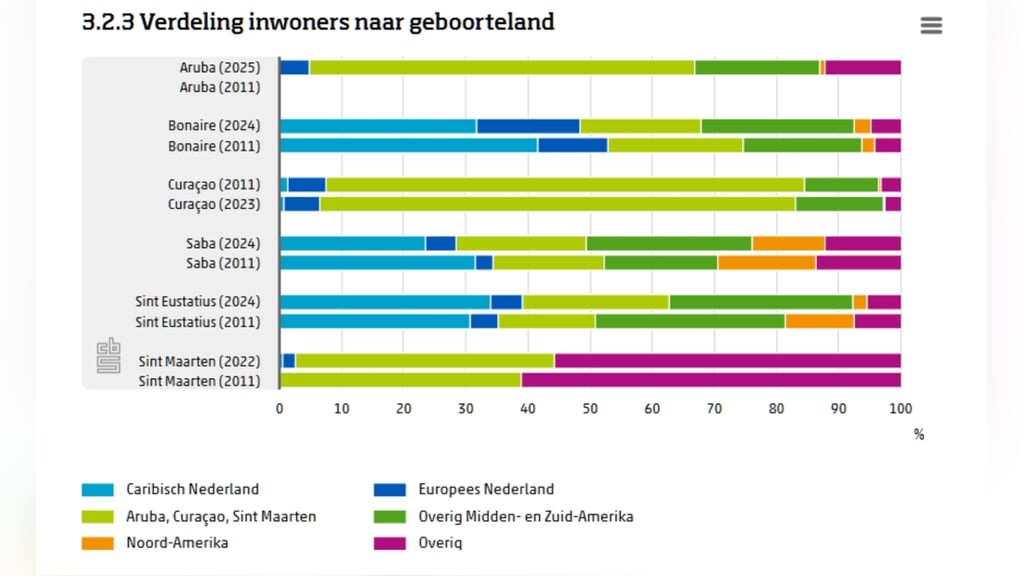
Population composition differs greatly per island. On Bonaire, Sint Eustatius, and Saba, only one-third of inhabitants were also born in the BES area. A quarter comes from Central and South America, another quarter from the CAS countries.
On Aruba, the picture is different: the majority of inhabitants were born on the CAS islands. Notable is that on Bonaire, 17 percent of inhabitants were born in European Netherlands, much more than on the other islands.
More languages
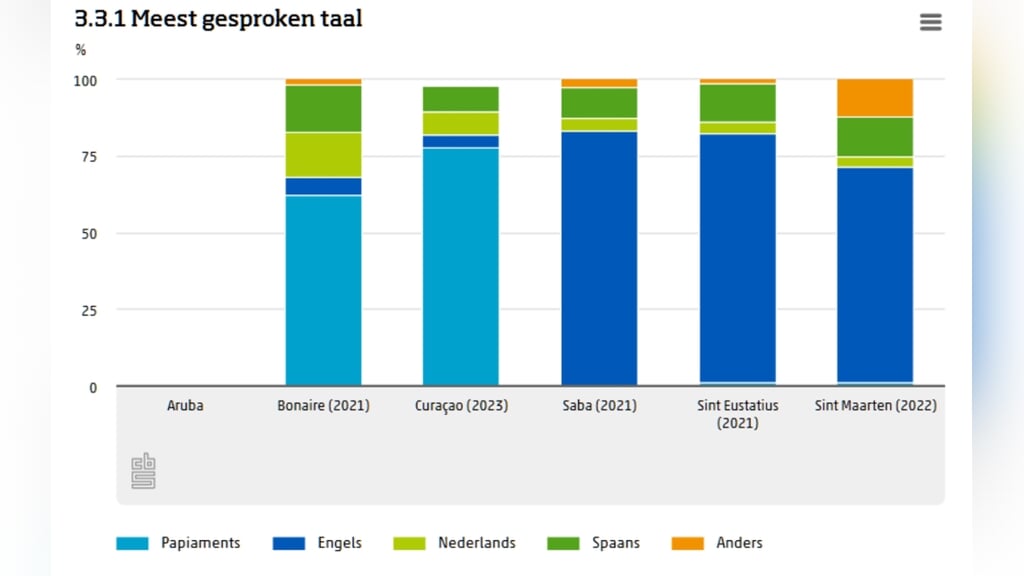
On the Leeward islands Bonaire, Curaçao, and Aruba, Papiamento is the main spoken language. On the Windward islands Sint Maarten, Sint Eustatius, and Saba, English is primarily spoken. On Bonaire, more than 90 percent of inhabitants speak more than one language.
CBS publishes these figures on the occasion of the fifteen-year anniversary of the current constitutional structure. The figures for the CAS countries come from local statistics offices on Curaçao, Aruba, and Sint Maarten.