
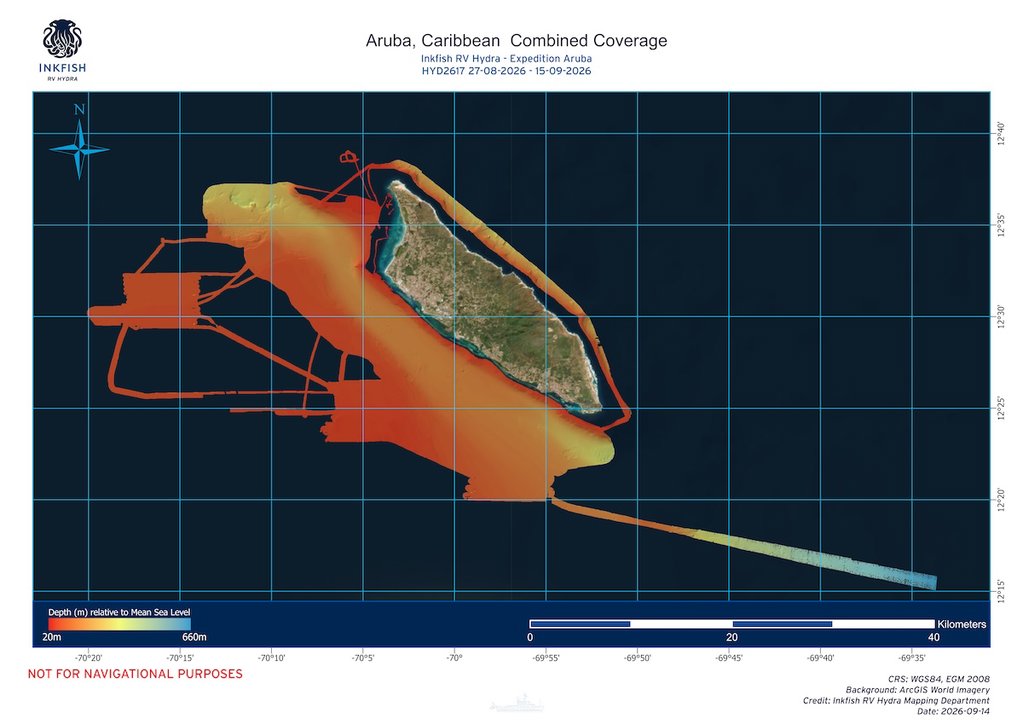
ORANJESTAD - The Inkfish Aruba expedition completed its offshore research on September 12, 2026. The international team surveyed the waters around Aruba from the research vessel RV Hydra more thoroughly than ever before, identifying at least nine objects at previously unknown locations off the western coast. The results will be presented in March or April 2027.
The research lasted three weeks. All known targets were scanned using multibeam sonar, a technique that maps the seabed using sound waves. In addition, the researchers found nine or more objects on the western side of the island that had not previously been recorded.
Although the fieldwork has been completed, much work remains. The expedition yielded a large volume of cartographic material, photographic material and scientific data that is now being processed.
First eDNA research in Aruba
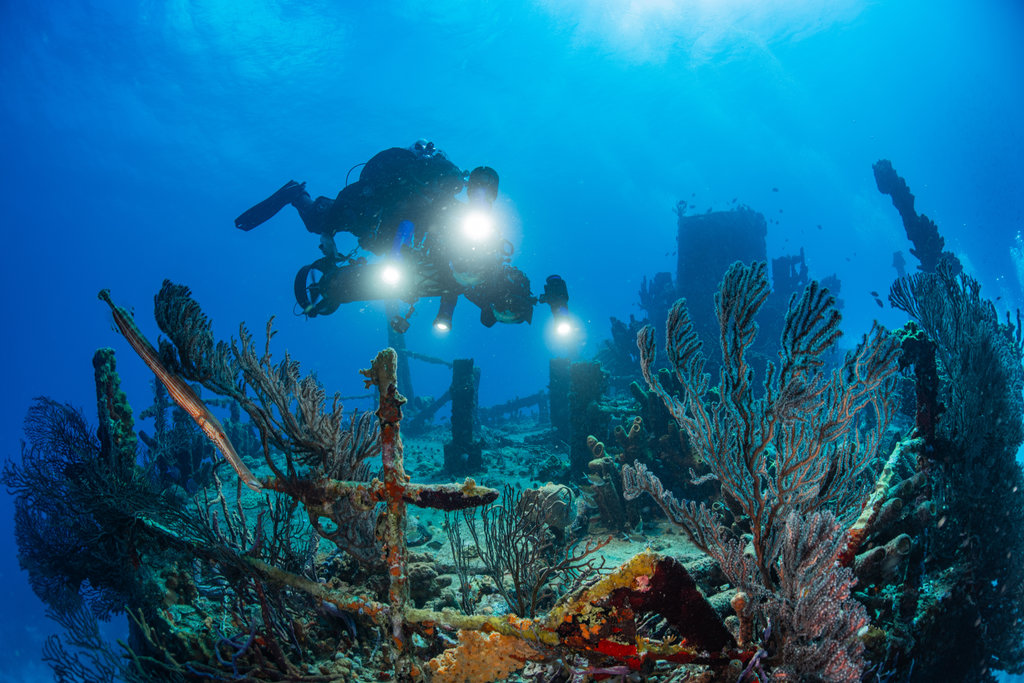
Alongside the mapping work, the researchers collected samples for eDNA analysis (environmental DNA, genetic material left behind by organisms in the water) and made photogrammetric recordings of selected wreck and reef sites. According to the organisation, this was the first time this type of eDNA research had been carried out in Aruba. The samples are intended to provide insight into the relationship between underwater heritage and the surrounding marine environment.
Aruban participation
The expedition involved the Museo Arqueologico Nacional Aruba (MANA), Imagination for Development and the Nature of Values Aruba (IDNOVA), the Aruba Conservation Foundation (ACF) and the international research organisation Inkfish. The fieldwork was prepared by MANA, including desk research by Aruban archaeologist Raymundo Dijkhoff. On that basis, the Inkfish team was able to select known sites and investigate them in order of importance.
Archaeologist Harold Kelly of MANA and ecologist Oriana Wouters of IDNOVA joined the international research team during the expedition. In doing so, they gained hands-on experience with advanced research methods, ensuring that Aruba was directly involved in the collection and interpretation of the data.
Agreements on the data
Minister of Culture Mike Eman signed a memorandum of understanding stipulating that the collected scientific data will remain available to Aruba. The data are intended to support future research, education and the long-term management and protection of the island’s underwater heritage.


