Dutch Caribbean Nature Alliance allocates more than $670,000 for nature restoration on Bonaire and Saba

Three local nature organizations on Bonaire and one on Saba will jointly receive more than $670,000 for nature restoration through the first grant round of the Dutch Caribbean Nature Alliance (DCNA) Conservation & Restoration of Key Habitats Program.
The projects focus on restoring mangroves, tropical dry forest, coastal areas, and cloud forest. This marks the first time the regional Key Habitats Program is being put into practice on the islands through concrete projects.
The Key Habitats Program was launched in 2025 as DCNA’s regional program for the long-term protection and restoration of important ecosystems in the Dutch Caribbean. This first grant round focused on two of the program’s five strategies: reducing the impact of free-roaming livestock and strengthening ecosystems’ resilience to climate change.
Four local projects, one regional approach
Nature organizations from all six islands were invited to submit a project proposal for this first grant round. The proposals were assessed through a structured process, which considered, among other things, how well they aligned with the goals of the Key Habitats Program and the priorities of this round.
A relatively large number of proposals came from Bonaire, which is reflected in the final selection: three of the four projects will take place on Bonaire and one on Saba.
This first grant round is therefore a first step in a multi-year regional approach. New grant rounds will follow in the coming years, again giving organizations from all islands the opportunity to submit projects.
The four selected projects
Mangrove Maniacs – ‘Healthy Mangroves for a Climate Resilient Bonaire’
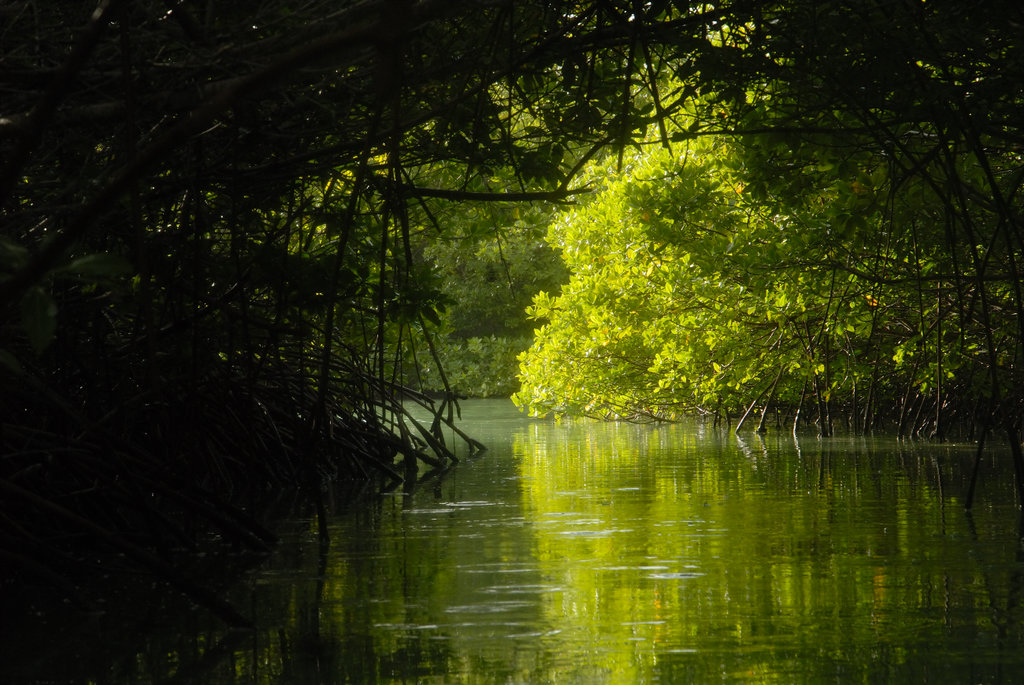
Mangrove Maniacs will restore the mangroves around Lac Bay. The work goes beyond the mangroves themselves: the project also addresses water flow, the restoration of tropical dry forest upstream, and the prevention of erosion and sedimentation.
BonBèrdè – ‘Strategic Fencing for Lac Coastal Protection’
At Lac Bay, BonBèrdè will install 825 meters of fencing to better protect approximately 160 hectares of tropical dry forest and coastal area.
In addition, the project will connect existing protected areas around Lac Bay, creating a continuous natural landscape of almost 600 hectares.
STINAPA – ‘Rewilding Washington’
In Washington Slagbaai National Park, STINAPA will restore 175 hectares of tropical dry forest in "Washington Area One."
By improving conditions for native vegetation, the dry forest will be given room to recover naturally. This is also expected to provide better habitat for plants and animals.
Saba Conservation Foundation – ‘Strengthening Climate Resilience of Saba’s Forest Ecosystems’
On Saba, the Saba Conservation Foundation will restore 3 to 5 hectares of cloud forest. The project involves removing invasive plants, replanting native species, and monitoring the results. In this way, native forest vegetation can return and the ecosystem will become more resilient.
Upcoming grant rounds
With these four projects, the first grant round of the Key Habitats Program is now getting under way on Bonaire and Saba, but this first round is only the beginning. More rounds will follow in the coming years, each centered on one or two strategies from the regional program.
"The Key Habitats Program is unique. For the first time, all six islands are working together under one shared plan, with clear and measurable goals extending to the year 2100. This regional approach gives us a strong foundation to protect and restore nature as a whole."
Arno Verhoeven, Director of DCNA
The Key Habitats Program is made possible by main sponsor Postcode Loterij, with additional funding from Bloomberg Philanthropies and WWF-NL.
More information about the Key Habitats Program is available at dcnanature.org/keyhabitatsprogram.


